Restorative Yoga: A Practice of Stillness and Slowing Down
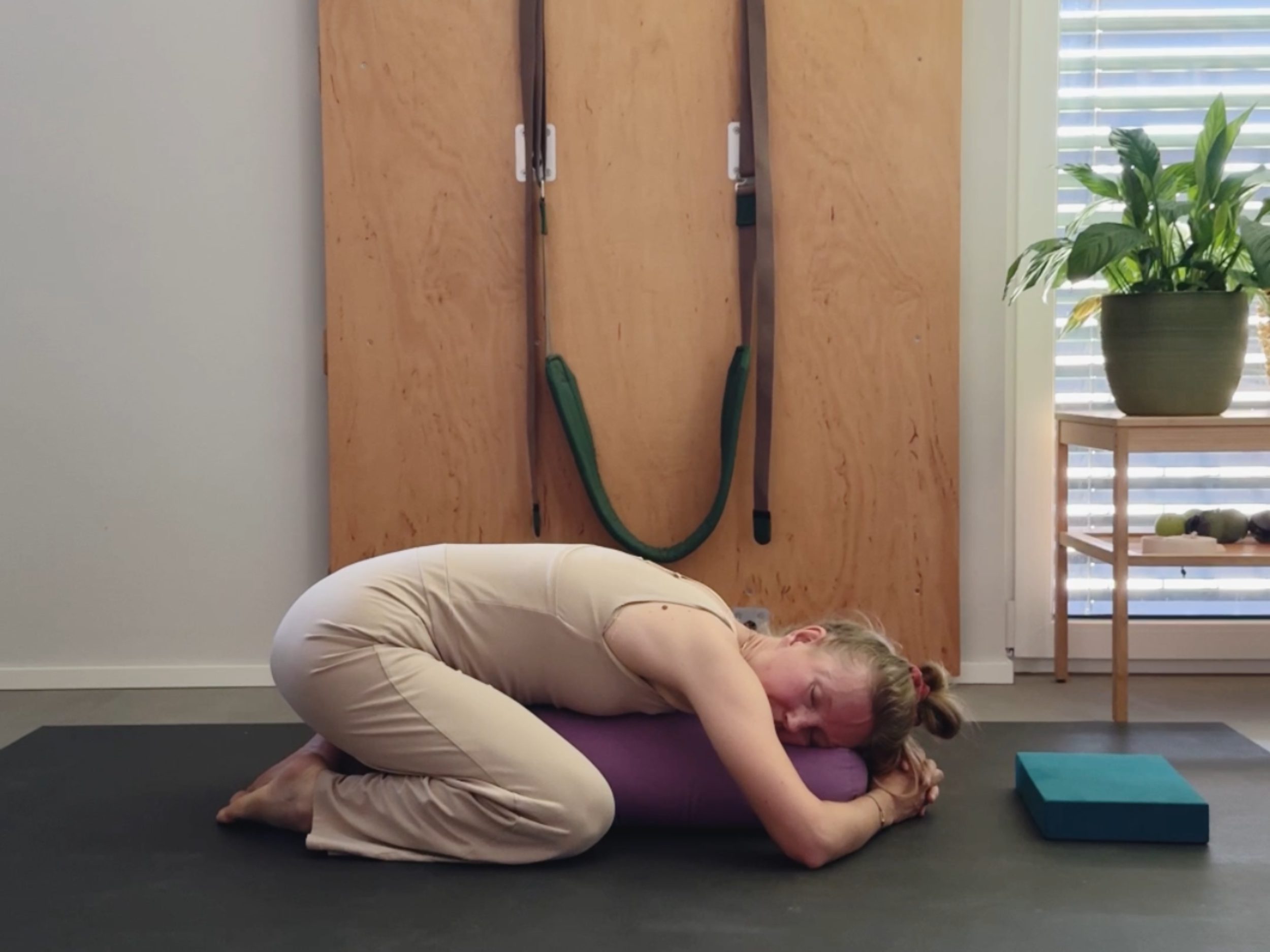
Supported Balasana/Child's Pose helps release tension in the lower back. It is a very calming, intorspective pose where the mind can find a sense of calm.
There are many ways to take a break, but taking a break isn't always peaceful, and it doesn't always lead to feeling rested. We can sit on the sofa and keep scrolling through our phones, replying to messages, or thinking about everything we still need to do. The body might be in a restful(looking) position, but if we keep filling our minds with information, it’s a bit like trying to take a nap in the middle of the dance floor of a nightclub. That doesn't sound very restful.
I think this is one reason so many of us find it difficult to truly slow down. Devices have become part of almost every pause in our day, changing what we think of as rest. We may have stopped moving, but the mind is still busy, taking in and processing information. So even when we take a break, we might not feel as rested as we hoped.
This is where Restorative Yoga becomes such a valuable tool. It gives us time, support, and a quieter environment in which to pause properly. The practice is free from devices, notifications, and constant interruptions. For 90 blissful minutes, no one needs anything from you. You can be with yourself, focus on yourself, and nurture yourself. That is precious and priceless.
There is no need to achieve a pose, stretch further, or work harder. The practice is about finding a position in which you can gradually let go of unnecessary mental and physical effort and become more present with yourself. At its core, restorative yoga is about learning to be in silence without needing to fill it. At first, all that silence can feel empty and even uncomfortable, but once you become comfortable with just being, you get to witness your best ideas being born and meaningful questions rising to the surface.
And you know what? You might even get a little bored from time to time. Take that as a luxury. We so rarely allow ourselves to feel bored anymore. Most of the time, we do everything in our power to avoid it!
So, what exactly is Restorative Yoga?
Restorative Yoga is a slow and gentle practice in which the body is supported by props such as bolsters, blankets, blocks, and straps. The positions are usually held anywhere from 5 to 20 minutes, giving you enough time to become comfortable, notice your breath, and allow both body and mind to settle.
The aim is not to create the deepest possible stretch. In fact, if a position requires you to brace, hold yourself up, or tolerate discomfort, it probably needs to be adjusted. More support is not a lesser version of the pose. It is an adaptation that makes the pose work for your body and allows it to become genuinely restorative. You need to feel comfortable and supported enough to relax.
Here are four ways Restorative Yoga may support us.
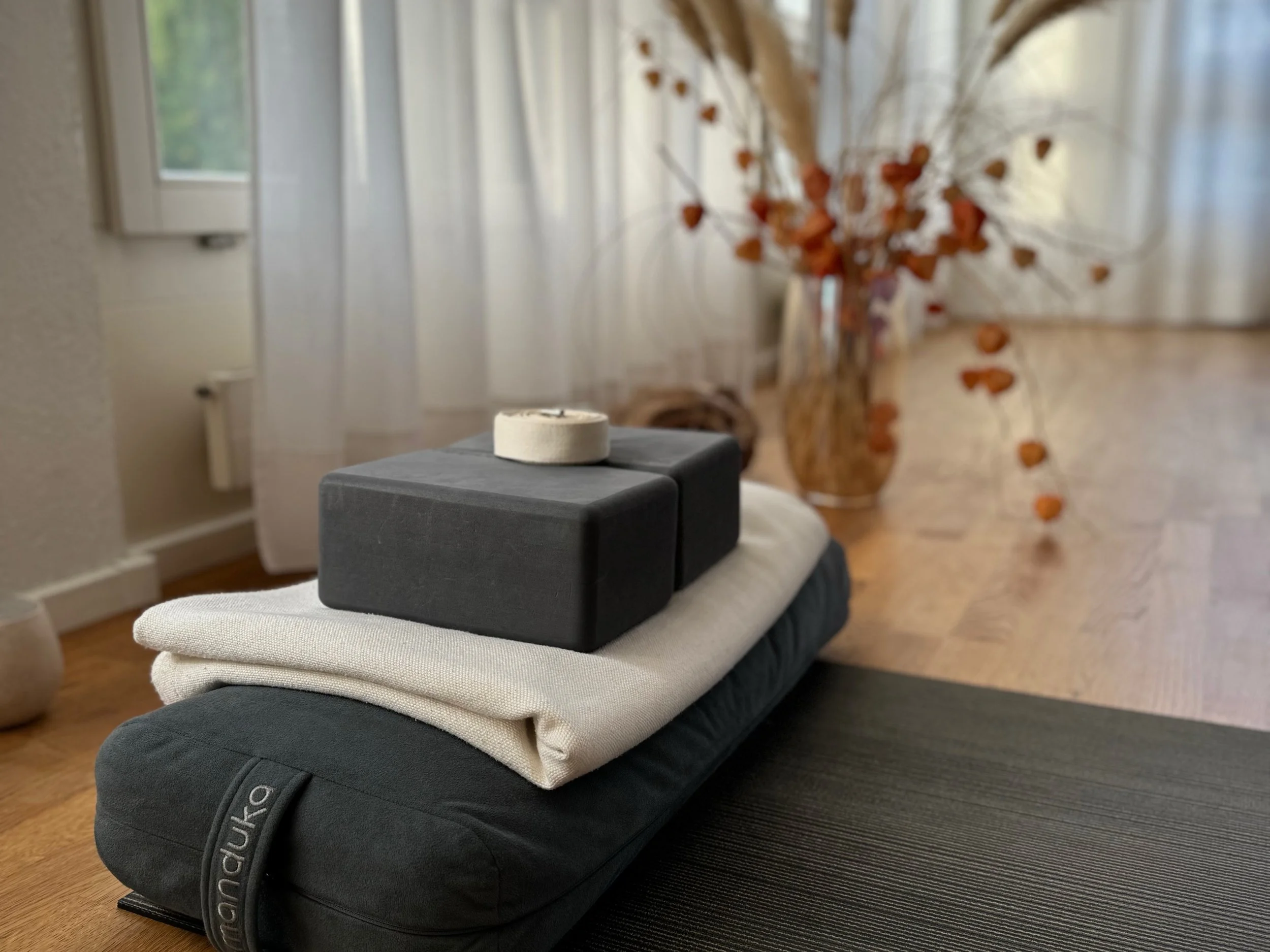
A basic set of props needed to practice restorative yoga.
1. It creates space for deep rest
Many of us are used to moving from one thing to the next. Even the activities we call relaxing often give the mind more information to process. Restorative Yoga offers something completely different: time with fewer distractions, less sensory input, and very little to do. In this practice, there is nothing to achieve, only space to receive.
That can sound simple, but it is not always easy. Stillness may initially make us more aware of restlessness, tension, or racing thoughts. We might even find it a little intimidating to just be without doing anything. The purpose is not to force the mind to become empty (which is basically impossible) or avoid noticing areas of tightness or discomfort. The purpose of the practice is to give yourself enough time to notice what is present and, little by little, let go and become quieter.
The combination of physical support, comfortable positions, unhurried breathing, and a calm environment helps create the conditions for relaxation. A single practice will obviously not remove all the stress from your life, but it can offer a meaningful pause within it and help you appreciate stillness.
2. It helps us notice and release unnecessary effort
We often carry more muscular effort than a situation requires. The jaw may be clenched, the shoulders lifted towards the ears, or the abdomen held firmly in without us fully realising the unnecessary tension we are creating and holding onto. These patterns can become so familiar that they begin to feel normal.
In a restorative yoga pose, the props take over much of the work of supporting the body. Because you are not trying to hold the position with your muscles, you have an opportunity to notice where you are gripping and experiment with letting some of that effort go.
3. It develops awareness of the body and breath
When movement slows down, subtle sensations become easier to notice. You may become aware of whether your breath moves freely or not, how fast your heart is beating, where the body feels supported, or where you are still holding tension.
That awareness helps us recognise what we need in the moment. Perhaps the position needs another blanket. Perhaps the head needs to be higher. Perhaps the breath becomes easier when the arms are placed differently. There is no prize for staying in a setup that does not feel right.
Learning to notice these signals can also be useful beyond the yoga mat. With practice, we become better at recognising when we are tired, tense, overwhelmed, or in need of a pause. Ideally, we notice these things before we're completely exhausted, in pain, or forced to stop and listen. Think of it as a form of prevention: noticing and responding to the quieter signals before the signals become so loud that it's impossible to ignore them.
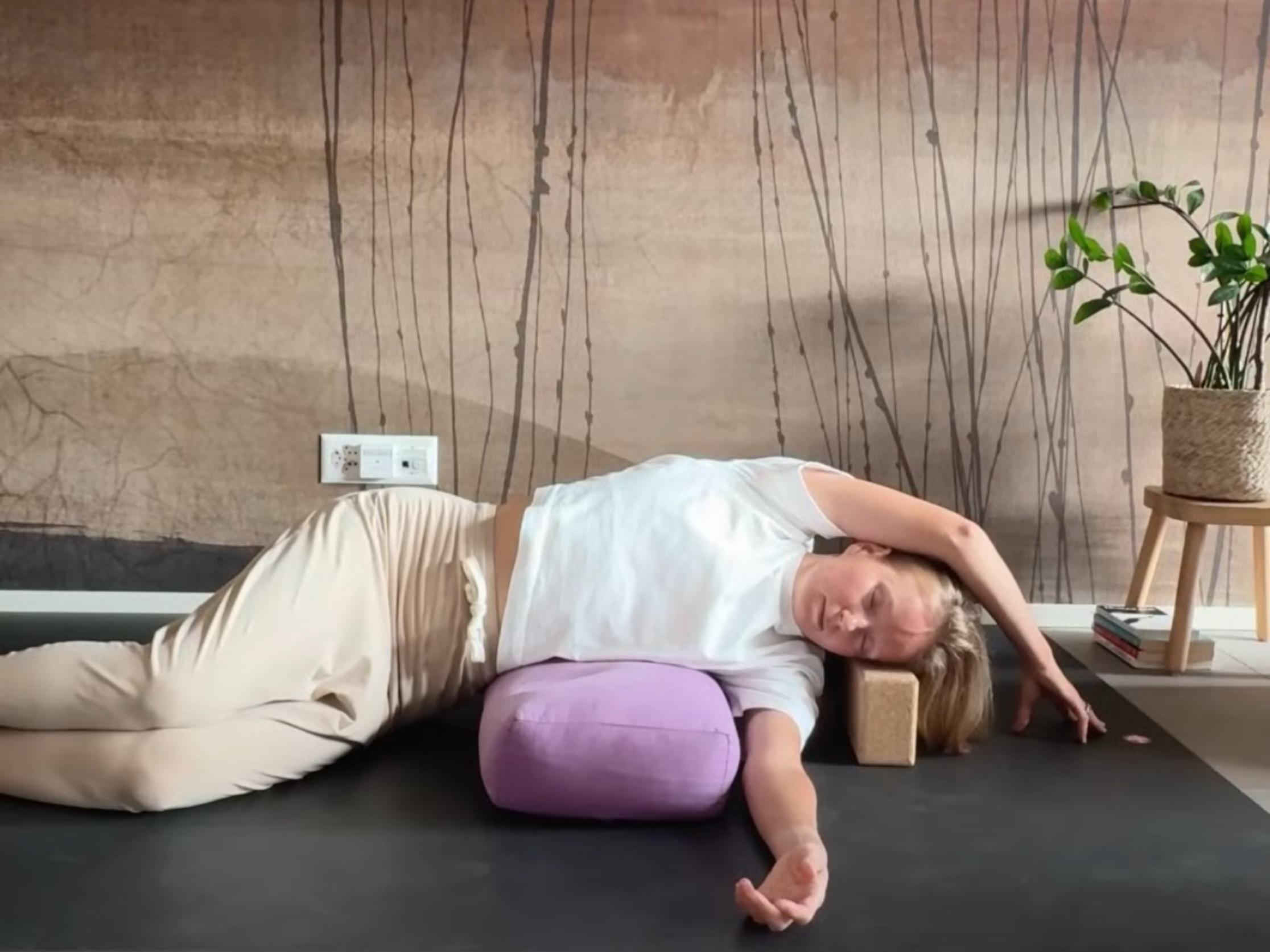
This side lying pose is one of my favorites in releasing tension in the rib cage and creating more space for the breath.
4. It can support us to wind down in the evening
Restorative Yoga cannot solve every sleep problem, and it should not be presented as a cure for insomnia. However, a quiet practice can be a helpful way to move from the activity of the day towards rest.
Fifteen to thirty minutes in one or two comfortable positions may be enough for an evening practice. Dimming the lights, putting the phone aside (preferably in a different room than where you're practicing), and allowing the breath to settle can create a clearer transition between doing and sleeping.
The value may be as much in the routine as in any individual pose. Repeating a simple, calming practice teaches us to make space for rest before we are completely exhausted. Falling asleep—and staying asleep—can be easier when the body and mind are relaxed rather than tense and agitated.
Rest is something we can practise
Restorative Yoga can look as though nothing much is happening. From the outside, someone may seem to be simply lying over a bolster under a blanket. But there is so much more happening on the inside. The stillness is the practice.
In Restorative Yoga, we are practising staying with ourselves without needing constant distraction. We are practising noticing sensations in the body and thoughts in the mind. We are becoming aware of the flow of the breath and the digestive system working. We are practising receiving support instead of always doing more or supporting others.
Some days this feels easy and natural. On other days, becoming still may feel surprisingly difficult. Both experiences belong in the practice.
You do not need to be flexible, experienced in yoga or naturally good at relaxing. You only need a position in which you feel sufficiently comfortable and supported to begin, and a willingness to explore your amazing self on a deeper level.
Join me for Restorative Yoga in Bellinzona
On Sunday, November 15, I will be teaching a 90-minute Restorative Yoga class at Centro Armonia in Bellinzona. The class will be taught in Italian and is open to beginners as well as experienced practitioners.
All the props needed for the practice will be provided, although you are welcome to bring your own yoga mat. Wear comfortable clothes and consider bringing a pair of warm socks so that your feet stay warm while you rest.
Sunday, November 15
17:00–18:30
Centro Armonia, Piazza Nosetto 3, Bellinzona
CHF 30
There are still two spots available; is one of them yours?
If you feel that you need a little more space to slow down and rest, you are very welcome to join me.
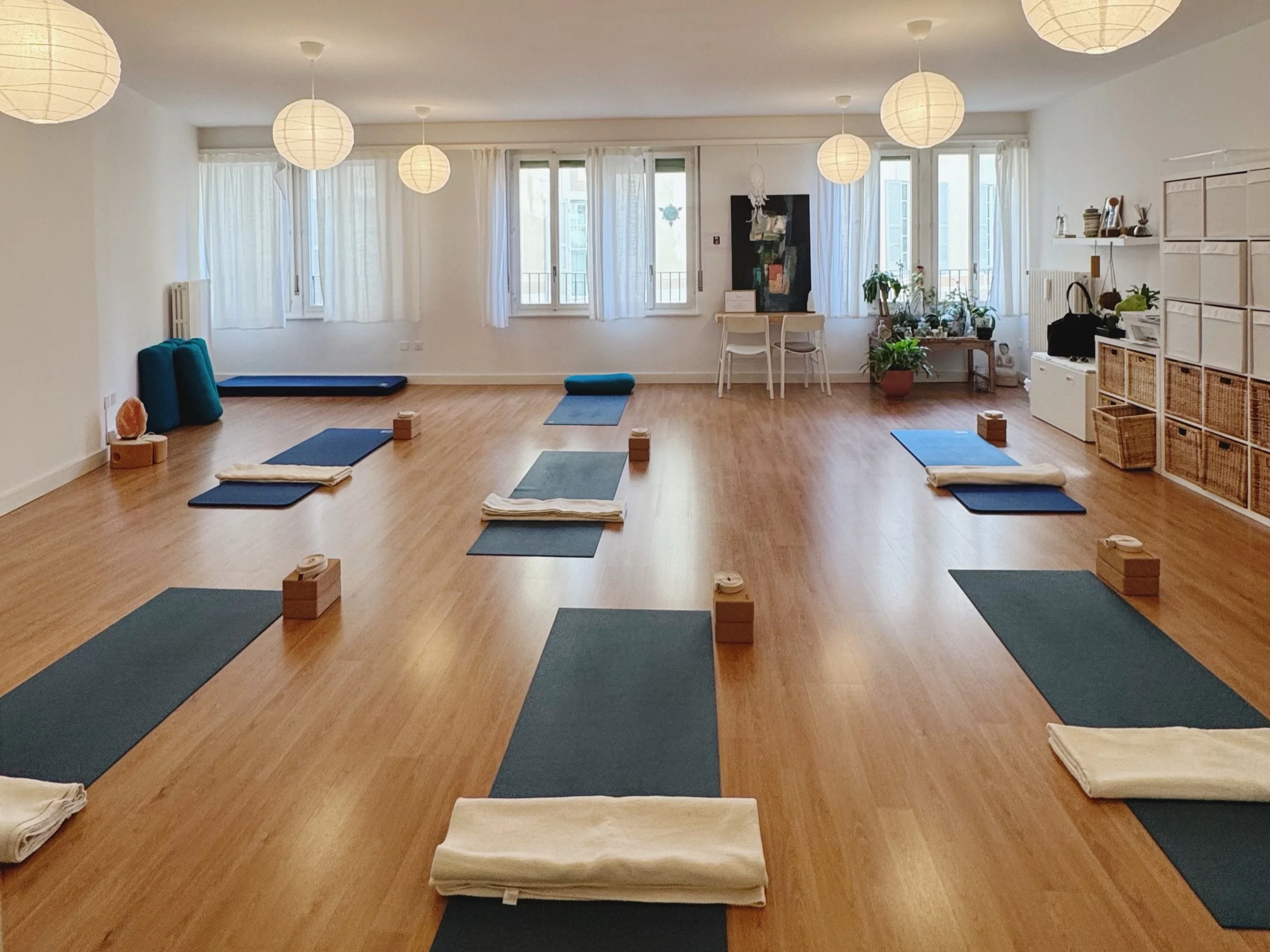
The beautiful Centro Armonia studio where all my yoga classes in Bellinzona take place.